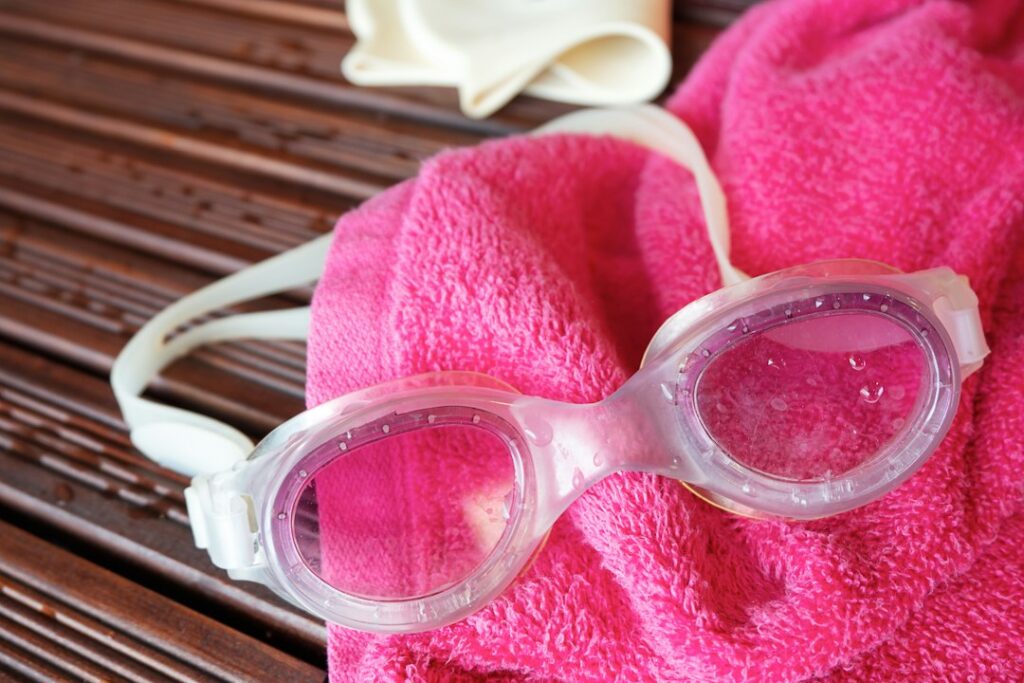

Material choice affects both comfort and appearance. Silicone is thicker and smoother than latex, so it tends to hold its shape, resist pulling, and provide a clean surface for a printed design. Latex is lighter and often more flexible, but some swimmers dislike its feel or have sensitivities that require an alternative. A cap should also accommodate the swimmer’s hair without being painfully tight. When comparing personalized swimming caps, treat material as a performance decision, not merely a preference. The right option is the one a swimmer will actually wear through a long practice or meet.
Artwork preparation is where many custom orders succeed or fail. Vector artwork uses mathematically defined lines rather than a grid of individual pixels, allowing a logo to stay sharp when enlarged. Raster images, such as ordinary phone photographs, can become blurry if they do not have enough resolution. Designers should also account for color contrast, because a navy logo on a black cap may disappear under indoor pool lighting. Keep important details away from the curved edges, where stretching changes their shape. A simple proof viewed at actual cap size is more useful than an impressive oversized preview.
Consider a local youth club entering its first invitational. Its coach might put the club name on one side and each swimmer’s first name on the other, giving officials and teammates an easy visual reference. A school team may prefer one shared crest because athletes graduate while the design remains useful. These are different goals, and they should not be forced into one template. Personalized caps work best when the design reflects how the group operates. For a large order, confirm spelling, capitalization, and the exact number of caps before production. One mistaken name is a small error with an embarrassingly public result.
Fit deserves more attention than decorative detail. A cap that slides over the eyes distracts a swimmer during a turn, while one that pinches around the forehead may be abandoned after warmups. Long hair may need to be gathered low and flat rather than piled high, and younger swimmers may need adult help putting the cap on without stretching it by the printed area. The opening should sit comfortably around the head, not be used as a handle. Since head shapes and hair volume differ, ordering a sample or checking available sizing guidance is sensible for an unfamiliar group.
Care habits can preserve both fit and readability. After swimming, rinse the cap with fresh water to remove chlorine, salt, and residue, then let it air-dry fully away from direct heat. Do not leave it crumpled in a wet mesh bag or yank it against rough fingernails. Store it flat or loosely folded once dry. If a team is coordinating apparel, custom team swim gear can be planned together so colors and lettering remain consistent across caps, suits, and warmups. That coordination is useful, but matching everything is not automatically better than a legible cap.
My preference is for personalized caps that do one job clearly: identify a swimmer or group without compromising comfort. A restrained design usually survives changing trends, poor pool lighting, and the visual chaos of a crowded meet. Ask who needs to read the cap, from what distance, and under which conditions. Then choose a suitable material, verify the artwork at real size, and check every name before approving production. Personalization has real value when it reduces confusion and builds team identity. It becomes needless decoration only when the design makes the cap harder to wear or read.