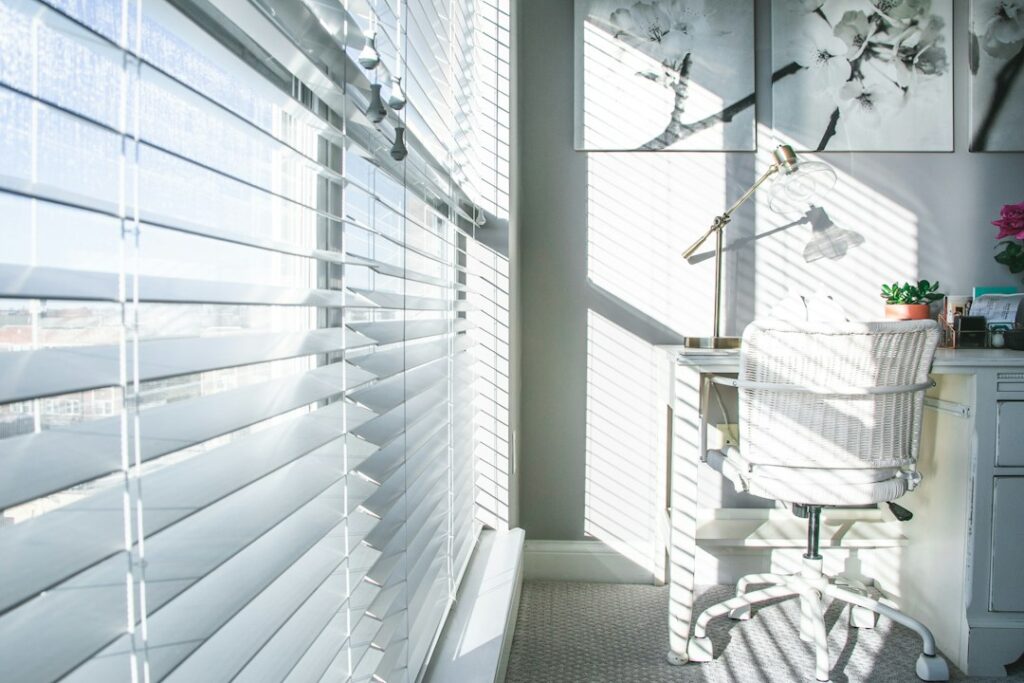

Roller blinds suit a clean, restrained interior, whereas Roman blinds and curtains introduce more folds and fabric. If you are comparing bathurst blinds and awnings, ask how each fabric handles glare, dust, privacy, and cleaning before making a decision based only on a colour card.nnFabric openness describes how loosely or tightly a screen material is woven. A more open weave may preserve a daytime view of the garden and soften reflections, but privacy changes after sunset when lights inside make the room visible from outside. A tighter weave generally provides more glare control and daytime privacy, though it can make the room feel darker. Hold samples beside the actual paint, flooring, and upholstery rather than relying on showroom lighting. It is also worth checking the reverse side of a fabric, since its appearance through the glass can differ from the room-facing surface.nnAwnings shade the outside of the glass before direct sunlight enters the room. That can reduce the amount of solar heat reaching interior surfaces, although the result depends on orientation, glazing, fabric, installation, and weather conditions. Folding-arm awnings can cover an outdoor sitting area, while straight-drop styles suit windows, balconies, or openings where projection is limited. Fixed awnings may suit a permanent sheltered structure. The installer should inspect wall space, fixing points, wind exposure, drainage, door movement, and safe clearance.
Ask how the awning is operated and what should happen during strong winds, rather than treating outdoor fabric as a set-and-forget item.nnShutters are worth comparing with fabric coverings in older Bathurst homes and rooms that need adjustable light control. Their louvres can be tilted to redirect sunlight, retain a view, or increase privacy without raising the whole covering. A closed shutter adds a layer near the window, but its result depends on the shutter frame, the fit, the glass, and the surrounding reveal. The reveal is the inside edge of the window opening. An inside fit sits within that recess, while an outside fit sits over it and may cover trim or make an uneven opening look more uniform. Measure architraves and sills before deciding which appearance suits the room.nnA careful measuring appointment should cover more than the width and height of the glass. Handles, locks, flyscreens, architraves, skirting boards, curtain rods, and the swing of nearby doors can all affect clearance. Older timber frames may vary by a few millimetres from one window to the next, so recording each opening separately is a useful habit. Discuss whether a manual chain, wand, spring mechanism, curtain track, or motorised control suits the reach and frequency of use.
A high window used every morning may justify easier operation, while a rarely adjusted guest-room blind may not need additional controls.nnBefore approving a quotation, read the inclusions rather than comparing only the headline price. Confirm whether the figure covers the site measure, installation, brackets, tracks, pelmets, removal of old coverings, disposal, and unusual access. Keep the written quote with the fabric name, colour reference, dimensions, operating method, lead time, and care instructions. That document makes it easier to identify a mismatch before installation. Ask how a measured opening will be handled if the wall, sill, or frame differs from what was visible during the appointment. For outdoor products, confirm cleaning instructions and whether the awning should be retracted in severe weather.nnA west-facing office with a desk beside the window may benefit from a low-glare screen blind paired with an external awning, because reflections on the display are the daily problem. A child’s bedroom may need dependable darkness, a soft fabric treatment, and a control placed where it can be used safely. In a lounge facing the garden, a shutter or screen blind may preserve the daytime outlook while reducing brightness. Curtains can also be layered over a blind when the room needs a softer appearance and additional evening privacy. Viewing alongside samples from your own room can help keep the selection tied to the window, furnishings, and routine rather than to a display setting.