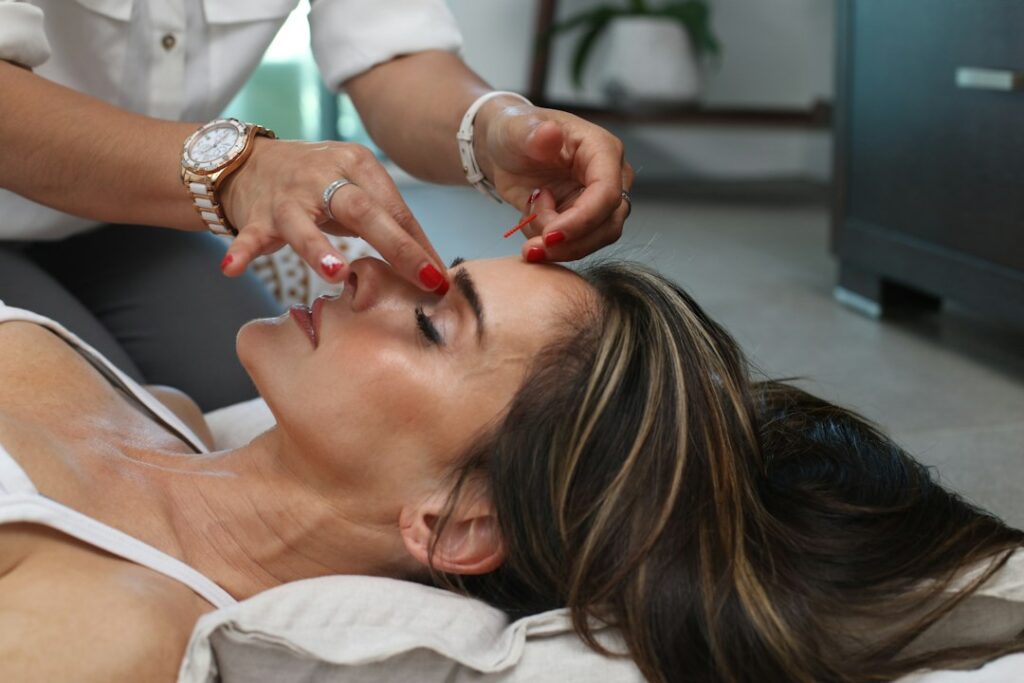

Dry needling commonly focuses on myofascial trigger points, which are sensitive areas within a tense muscle that may produce pain locally or sometimes in a nearby region. The needle delivers no drug. Its placement is guided by the assessment and may involve muscle or adjacent soft tissue, rather than traditional acupuncture points. Acupuncture and dry needling can use similar-looking needles, but they arise from different clinical frameworks. If you search for dry needling falcon, useful questions concern the practitioner’s training, your symptoms, and the proposed purpose, not an assumption that the treatment suits every type of pain.
An initial appointment should involve more than selecting a sore spot. The physiotherapist may ask about the pain, medical history, medicines, activity, sleep, previous treatment, and goals, then assess movement and muscle sensitivity. They should explain which area they propose to treat and how you can give feedback. A brief twitch can occur when a sensitive point is stimulated, causing the muscle to contract and release. However, a twitch is not essential, and a larger response does not prove that treatment is more effective. Needle number, location, and depth should reflect clinical reasoning and your comfort.
Many people imagine that dry needling must be sharply painful, but sensations vary between people and body regions. You might notice a small prick, pressure, a cramp-like twitch, or a short-lived ache. In a clearly hypothetical example, a runner with a persistently tight calf might feel a quick contraction followed by tenderness, while an office worker with a tense upper trapezius might mainly notice pressure near the shoulder. Tell the clinician if the sensation is too strong. A slower explanation, suitable positioning, pauses, and calm breathing may help someone who feels uneasy around needles.
The proposed effect is not muscle cleansing, and dry needling is not a guaranteed quick fix. Stimulation may change sensitivity in the treated area or temporarily reduce muscle guarding, making movement or exercise feel easier. That possible short-term change is most useful when it helps someone take part in rehabilitation. For example, if an office worker turns their neck more freely afterwards, the improvement may still need support from mobility work, strengthening, workstation adjustments, or sensible load management. The practical question is whether needling contributes to a coherent plan, not whether it works alone.
Temporary tenderness, bruising, fatigue, or a mild increase in symptoms can occur after treatment. Appropriate clinical procedures are intended to reduce risk, but suitability still needs individual consideration. Tell the physiotherapist about pregnancy, a bleeding disorder, medicines affecting clotting, immune problems, skin infection, allergies, or a history of fainting. Needling should not be performed through infected or damaged skin. A clinician may recommend another approach when the possible disadvantages outweigh the likely benefit. You should be able to ask about alternatives, expected after-effects, and what to do if symptoms become unexpectedly severe.
There is no universal number of sessions because the underlying problem, sensitivity, sleep, workload, and rehabilitation habits differ. One person might use needling briefly to settle a painful flare before beginning exercises; another might need reassessment after several visits to decide whether it is helping. Relief lasting only a few hours is useful information, not a reason to tolerate endless treatment. Before starting, ask what change will be measured, when progress will be reviewed, and what you can do between appointments. Clear advice from a local physiotherapy service can help you make a comfortable, informed choice.